










Tracks Safaris is ATOL protected and a member of the Travel Trust Association – giving you 100% financial security and absolute peace of mind when booking your holiday with us.
September 2026 saw Sue Preater – MD of Tracks Safaris – travelling to southern India to discover the wildlife and culture of the region.

Visiting southern India has been on my radar for some time – I wanted to experience the wonderful history and culture of Tamil Nadu and Kerala, as well as visit Kabini and Bandipur to check out the wildlife and see how the experience compares with, say, central India.
In September I flew with Air India (a first for me) from LHR to Bangalore – one of India’s most populous cities. This trip gave me the opportunity to explore two very different sides of India. I began with several days exploring the wildlife areas of the Western Ghats before joining a wider journey through Tamil Nadu and Kerala and finishing in Mumbai with a flourish – a night at the Taj Mahal Palace.
A direct flight from London to Bangalore with Air India offered the best overnight timings. On landing in India, I was met and driven the three hours to Mysore for an overnight stay and my first curry dinner – it does not take long to adjust to the amazing Indian food, which for me is a real treat!
Mysore, Bandipur and Kabini
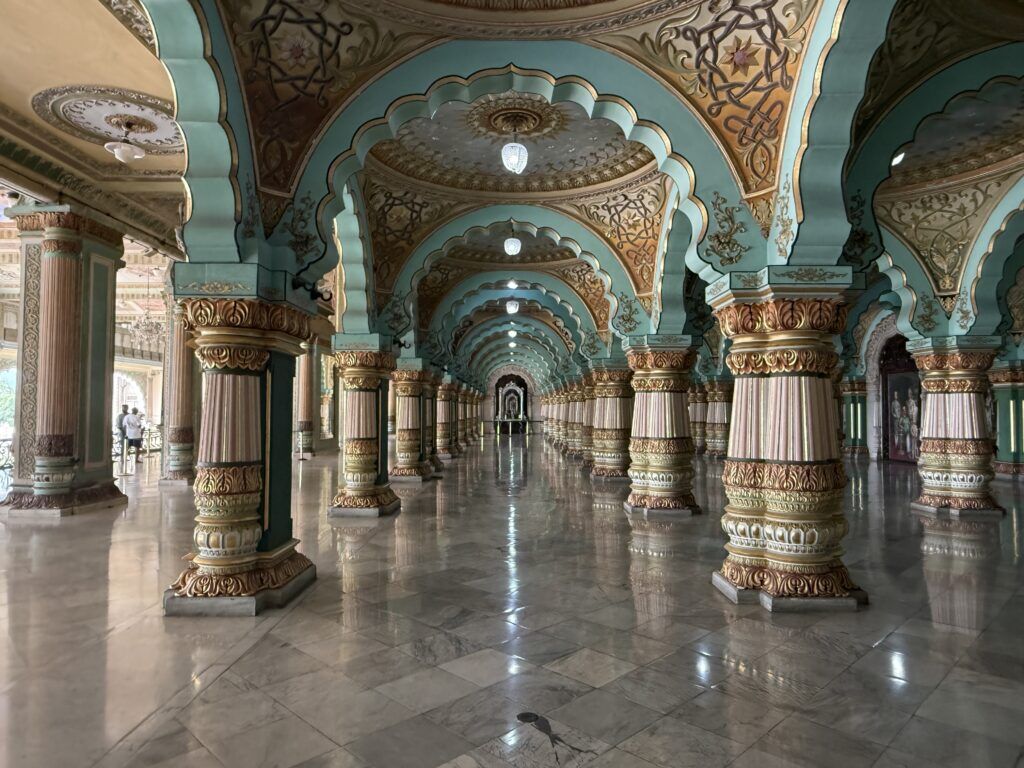
Known as the City of Palaces, Mysore is well known for its royal heritage, grand architecture, colourful markets, silk-weaving traditions, sandalwood products and vibrant cultural legacy. Mysore’s temple and palace were on the agenda for my first morning. The palace was quite extraordinary, featuring ornate halls, gilded ceilings and a fascinating mix of architectural styles. You can see the whole of Mysore from Chamundi Hill and visit the ancient Chamundeshwari Temple at the top of 1,000 stone steps (we drove!)
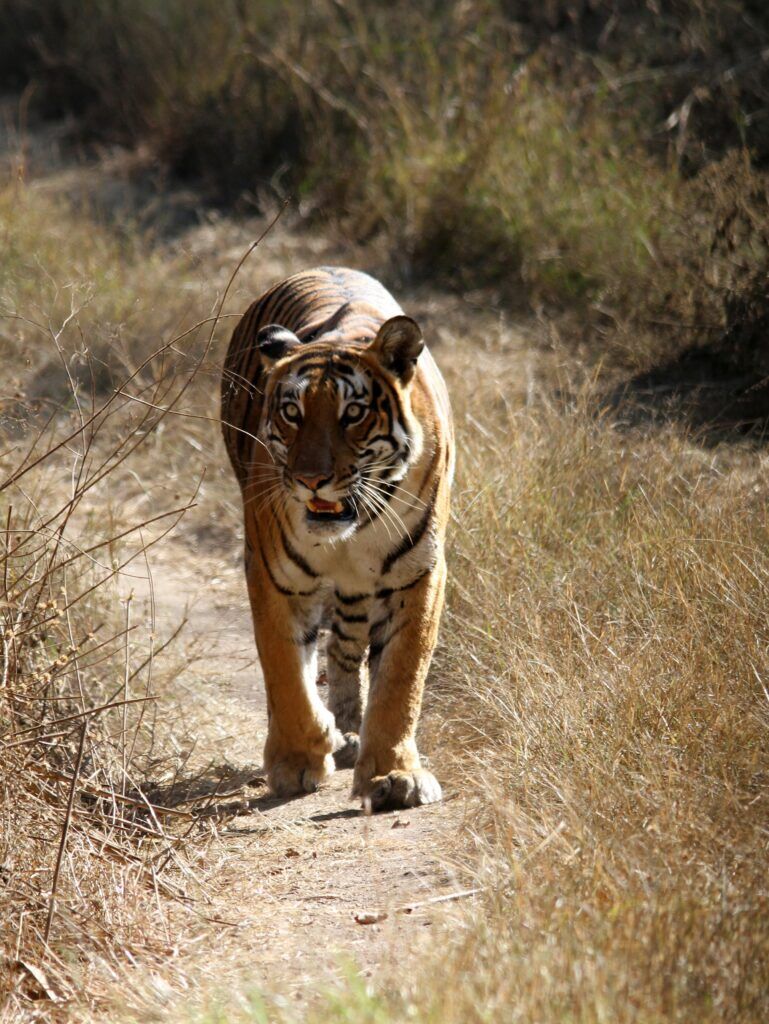
We just reached Bandipur in time for an afternoon game drive – with two tiger sightings in 20 minutes! My base was The Serai – a stunning lodge set close to Bandipur National Park in the Chamarajanagar district of Karnataka. The park’s dense forests, rivers and scenic hills are home to tigers, sloth bears, leopards, dhole, elephants, gaur, chital and sambar, striped hyenas and over 200 bird species. African adventurers thinking about a trip to India might like to know that ‘bush loos’ are not permitted in Indian national parks – I made the mistake of restricting my fluid intake for the three-hour plus safari and consequently became dehydrated – essential to take rehydration sachets!
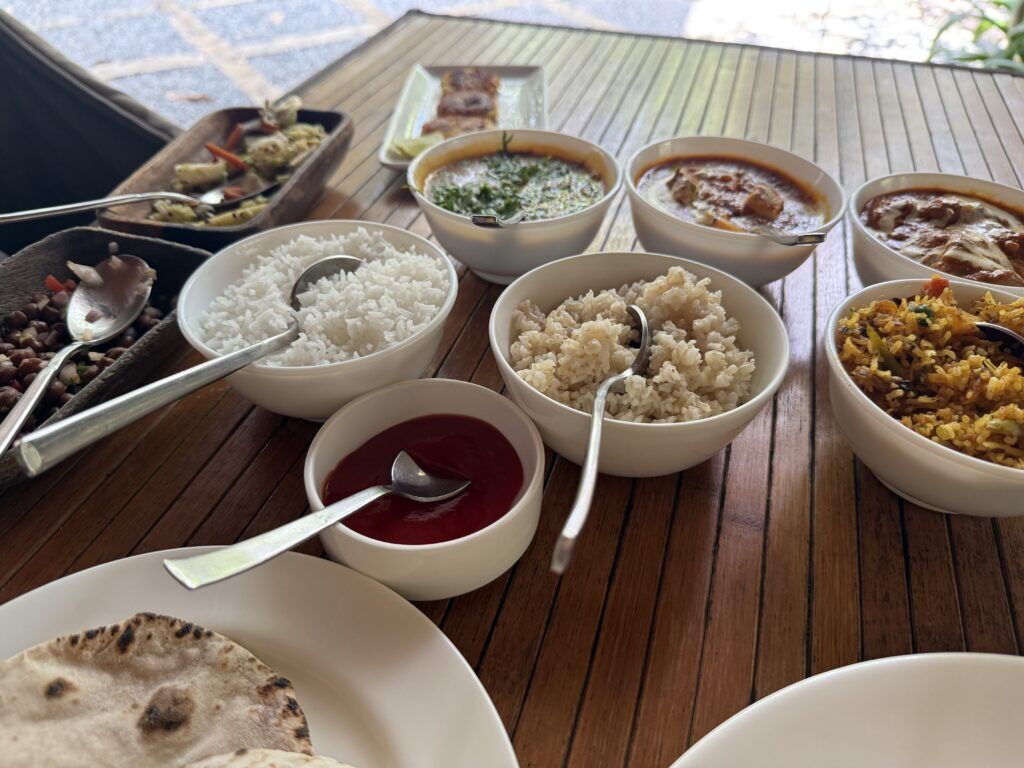
Just three hours’ drive away is Kabini, situated on the southeastern edge of Nagarhole National Park, where I stayed at the lovely Kaav Lodge, with friendly, knowledgeable and extremely passionate naturalists offering safari-experience evenings and talks about the local tigers. A real bonus was the amazing home-cooked food. On the downside for some wildlife enthusiasts would be the safari experience – safaris are government-controlled and most vehicles had three people sitting across each bench seat in three rows – no sense of personal space at all. But for others with a sense of adventure, this would offer a real ‘local’ experience and the chance to talk to locals enjoying the park. Boat safaris on the lake are excellent, with the chance to see tigers, elephants and a myriad of birds and raptors.
After a seven-hour train journey of endless vistas, palm trees and paddy fields, I arrived at Puratchi Thalaivar Dr. M.G. Ramachandran Central Railway Station in Chennai. Along the way, I happily munched through a lunchbox purchased from a local café before I boarded in Mysore (yet more curry!)
From wildlife into southern India
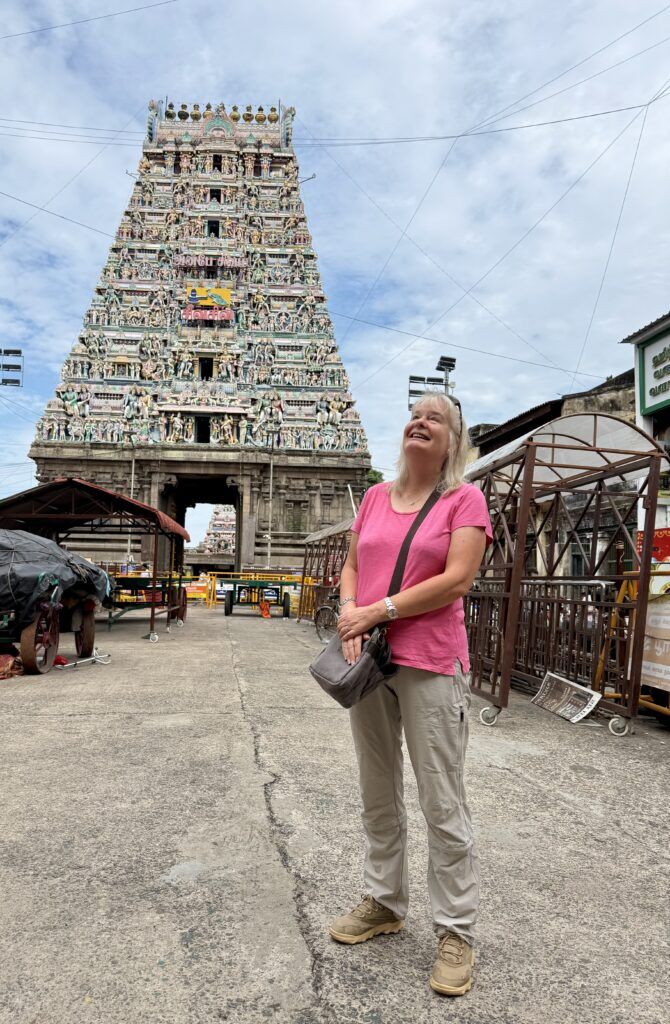
Chennai – formerly Madras – is set on the Bay of Bengal and is the largest city in Tamil Nadu, India’s southernmost state. I had just a couple of hours to discover its charms with my guide before heading to Mamallapuram – famous for its 7th- and 8th-century rock-cut temples and UNESCO World Heritage monuments. This is really off-the-beaten-track India, and we enjoyed a tuk-tuk ride through the countryside and rural villages visiting temples and exploring a way of life unchanged for centuries – a very unique experience!
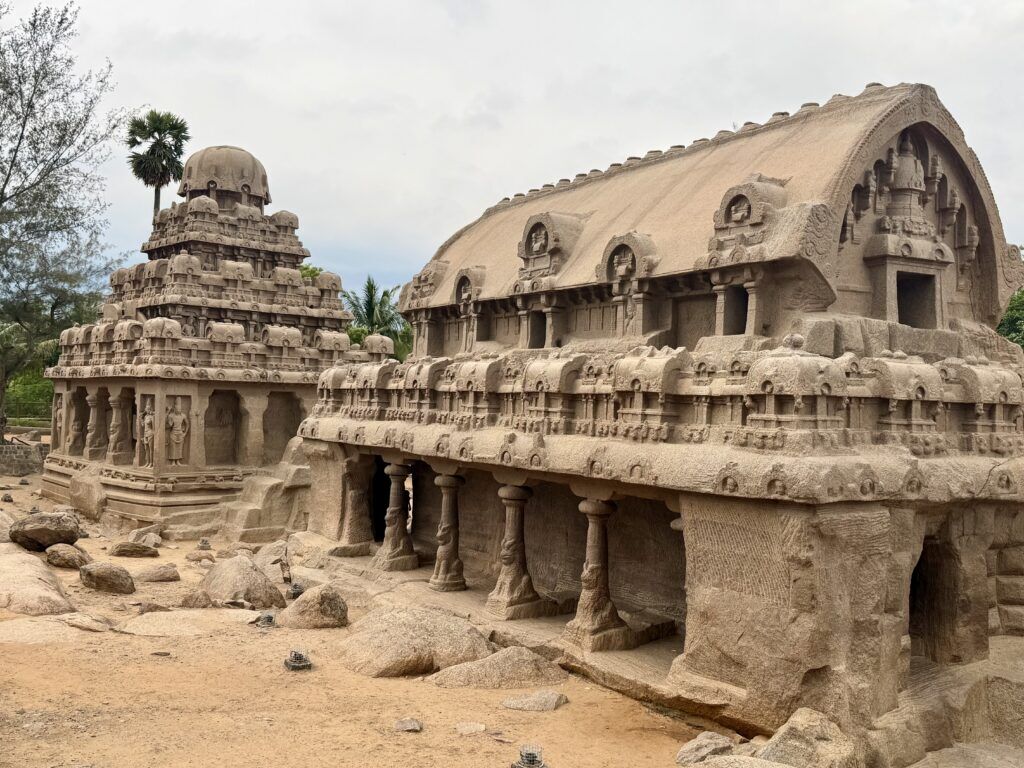
Tamil Nadu — temples, villages and everyday India – India is many experiences rolled into one!
A quick flight took us from Chennai to Madurai, where we checked in to the lovely Heritage Madurai – a former colonial clubhouse with a fabulous Ayurvedic spa. A real highlight here was a cycle-rickshaw tour exploring the city, including the Meenakshi Amman Temple and bustling market streets, and culminating in a street-food dinner served on a banana leaf at a street-corner open-air café – absolutely delicious!
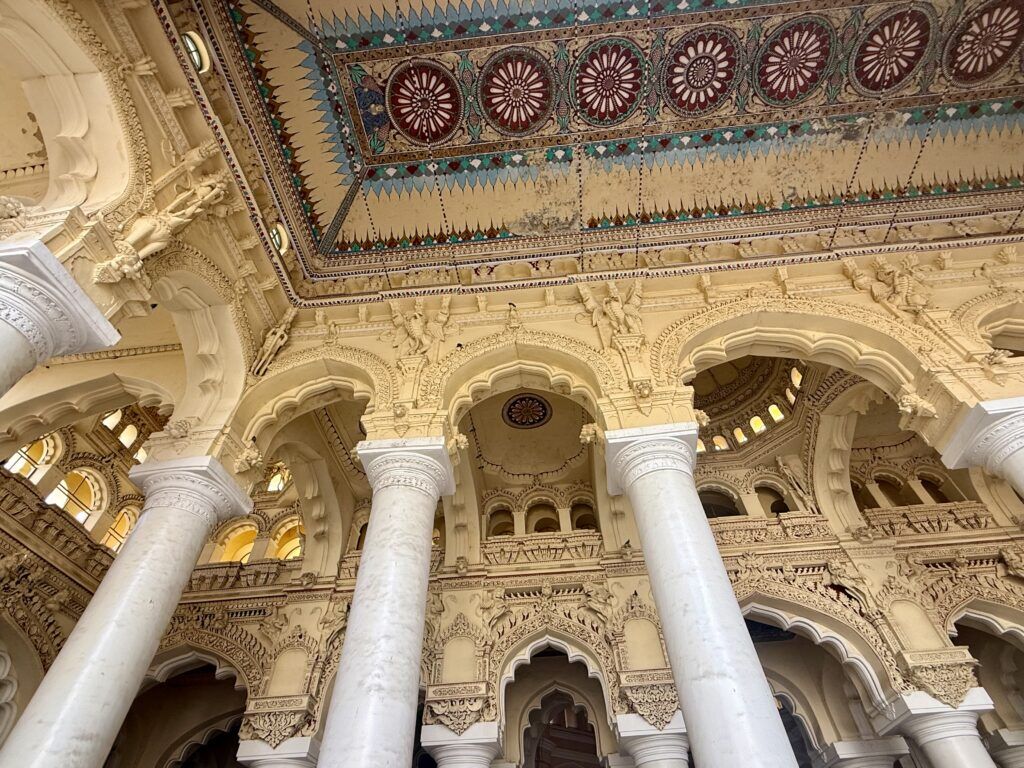
Into the Western Ghats
Our journey climbed out of Tamil Nadu into the mountains towards Thekkady, through the Western Ghats. We visited a local spice plantation and then continued to Periyar, where we enjoyed a community martial arts demonstration. Travelling further into the mountains and through remote villages took us on to Mamalakandam for an off-road jeep safari and a visit to the nearby Thattekad Bird Sanctuary. Our entertainment that evening was a tribal cooking demonstration by a local chef who cooked chilli chicken in a length of bamboo whilst dancing and singing – again absolutely delicious!

A little downtime
A little downtime is always appreciated, and we stopped over at the wonderful five-star eco-luxury heritage resort of Coconut Lagoon – a little slice of paradise set on Vembanad Lake with a superb Ayurvedic spa. After a Shirodhara treatment where warm, medicated oil was poured in a continuous, rhythmic stream over my forehead, and a massage, we enjoyed some traditional Indian dancing in the evening. The next morning we headed to our houseboat for a three-hourcruise through canals and lagoons, watching birdlife, fishermen and village life float past at a very leisurely pace – with a local curry lunch!
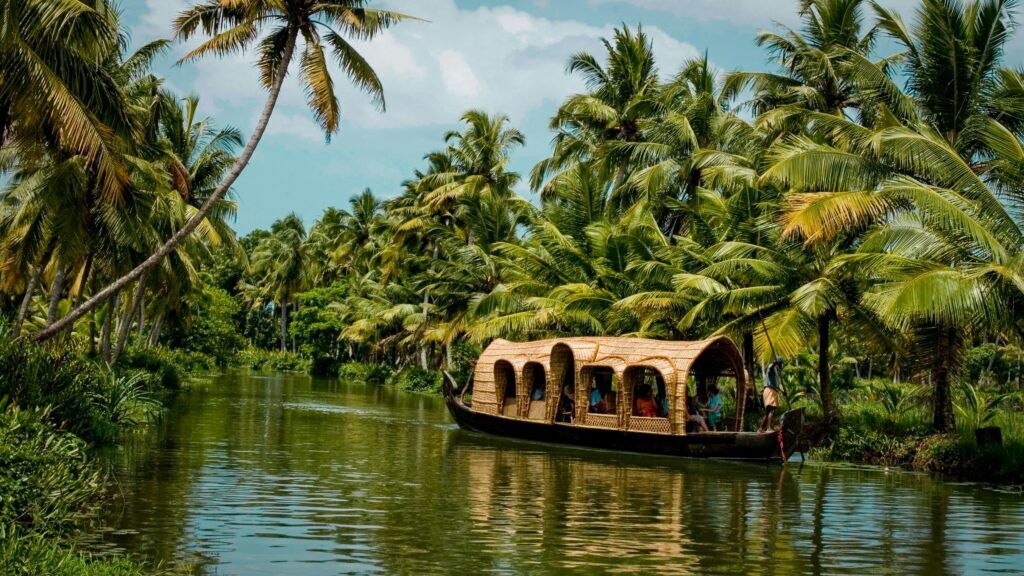
Fort Kochi – Chinese fishing nets, colonial architecture and Kathakali
Fort Kochi was the last stop on our southern India exploration. Here we enjoyed a visit to Mattancherry Palace (Dutch Palace) – a former royal residence featuring rare 16th-century Hindu epic murals – and to the Santa Cruz Cathedral Basilica. Later in the evening, we visited the Kerala Kathakali Centre, which offers live evening performances of traditional Keralan dance-drama, complete with pre-show face-painting sessions.

Mumbai
Twenty-four hours in Mumbai – India’s most populous city, a major financial centre and the heart of Bollywood. A city of contrasts, opportunity and hope, with frenetic markets, Gothic Victorian architecture and gourmet cuisine, and famous for Slumdog Millionaire – a drama set in the Dharavi and Juhu slums.
After a stay at the iconic Taj Mahal Palace and some last-minute shopping at Fab India and Anhouki, I headed for the slums with my guide Raj to experience the other side of Mumbai – a glimpse into creativity, mass recycling and a hive of industry. Fascinating, rejuvenating, reflective and resilient.
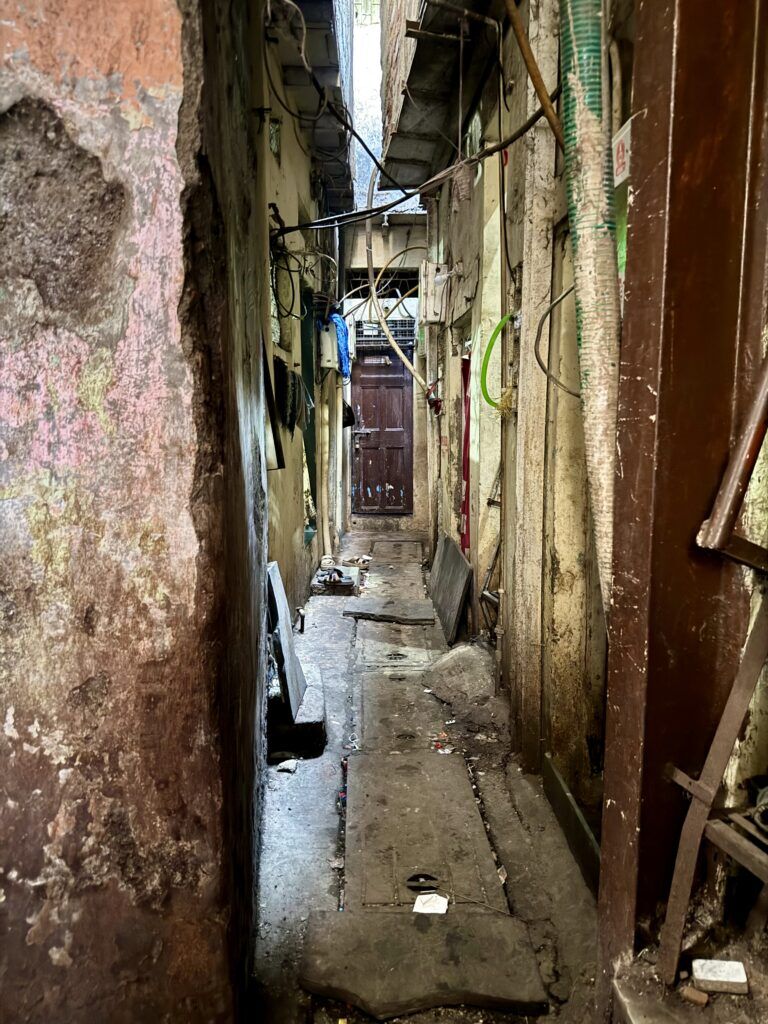
All in all, if you would like to get a real taste of southern Indian life and a glimpse of wildlife in a very local style, southern India offers limitless opportunities. If, however, seeing and photographing wildlife in a more relaxed way is your priority, you could combine central Indian wildlife parks such as Kanha, Tadoba, Bandhavgarh, Pench and Satpura with a shorter southern Indian exploration. Just let us know what is important to you, and we will tailor your perfect adventure!
Want to go too? Then view our Southern India Explorer itinerary. This itinerary can be modified to suit your interests, timescale and budget – please ask!
Better still – pick up the phone and talk to someone who has been there – we are looking forward to hearing from you.
Our expert staff are on-hand, happy to assist with any enquiry you have.